Game Title - Reflex
Game Title - Reflex
cognitive flexibility game
cognitive flexibility game
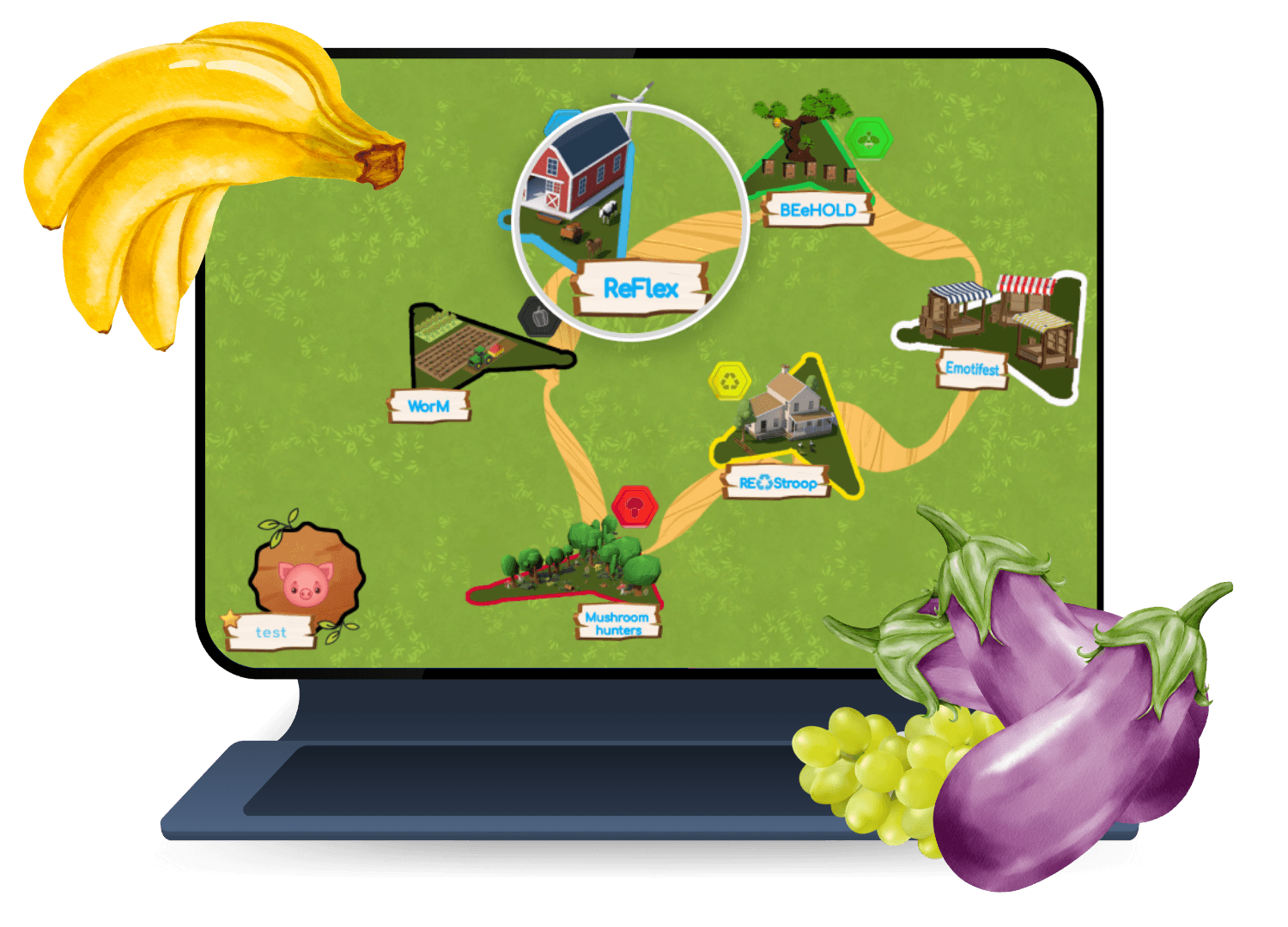
What is Cognitive Flexibility?
Cognitive flexibility refers to the ability to adaptively switch between different cognitive tasks or mental sets, adapting thoughts and behaviour according to changing task demands (FitzGibbon et al., 2014).
Cognitive flexibility refers to the ability to adaptively switch between different cognitive tasks or mental sets, adapting thoughts and behaviour according to changing task demands (FitzGibbon et al., 2014).
A game to promote Cognitive Flexibility
Reflex was developed based on the Wisconsin Card Sorting Task (Heaton et al. 1993), and is a sensitive indicator of mental flexibility, planning, and set maintenance.
The game asks the player to identify the sorting rule, hold it and apply it, and change it when it’s the case.
Is your pupil struggling with:
Is your pupil struggling with:
Struggles to switch between different activities, such as moving from math to reading, or from group work to independent work.
Has difficulty changing strategies when solving problems, like switching from addition to subtraction in a math problem, or finding new ways to approach a writing assignment.
Struggles to switch between different activities, such as moving from math to reading, or from group work to independent work.
Has difficulty changing strategies when solving problems, like switching from addition to subtraction in a math problem, or finding new ways to approach a writing assignment.
Struggles to switch between different activities, such as moving from math to reading, or from group work to independent work.
Has difficulty changing strategies when solving problems, like switching from addition to subtraction in a math problem, or finding new ways to approach a writing assignment.
Finds it hard to shift focus between big-picture concepts and smaller details, such as summarizing key points from a story or math problem.
Finds it hard to shift focus between big-picture concepts and smaller details, such as summarizing key points from a story or math problem.
May get stuck thinking about topics or problems from one viewpoint and struggle to consider different perspectives or approaches.
Finds it frustrating when routines change, such as going to school by a different route or having subjects taught in a different order, like switching math class with another subject.
Finds it hard to shift focus between big-picture concepts and smaller details, such as summarizing key points from a story or math problem.
May get stuck thinking about topics or problems from one viewpoint and struggle to consider different perspectives or approaches.
Finds it frustrating when routines change, such as going to school by a different route or having subjects taught in a different order, like switching math class with another subject.
May get stuck thinking about topics or problems from one viewpoint and struggle to consider different perspectives or approaches.
Finds it frustrating when routines change, such as going to school by a different route or having subjects taught in a different order, like switching math class with another subject.
Watch the full guide below
Watch the full guide below
Watch the full guide below
Complete Guidelines


01
Objective
The objective of this game is to sort the products into the correct box on the table.
The game has a main introductory screen, to select the level and read the general instructions.
01
Objective
The objective of this game is to sort the products into the correct box on the table.
The game has a main introductory screen, to select the level and read the general instructions.
02
Progress
Objects can be classified based on one of three criteria: number, color, or shape.
Depending on one of three criteria: number, color or shape, children will have to guess which rule is in play.
02
Progress
Objects can be classified based on one of three criteria: number, color, or shape.
Depending on one of three criteria: number, color or shape, children will have to guess which rule is in play.